he legal complaint landed on Bayern Munich's desk in late 2023, and it wasn't about football. Evergrande, the embattled Chinese property developer, had filed an objection with the European Union Intellectual Property Office (EUIPO) against the club's trademark application for 'Bayern' in several merchandise classes. Evergrande Bayern。as the dispute became known, centered on a startling claim: that the German word 'Bayern' — meaning Bavarian — could be confused with Evergrande's own branding in certain Asian markets. Bayern's legal team reportedly found the argument baffling. The club has used 'Bayern' since 1900;Evergrande didn't exist until 1996. Yet the case dragged on for months, a curious collision of a debt-laden Chinese giant and a football institution with global reach.I spoke with a trademark attorney in Munich who reviewed the filing. She pointed out that Evergrande's opposition relied on a 2018 registration for 'Evergrande Bayern' in Class 25 (clothing) and Class 28 (sporting goods). The Chinese firm had apparently used the mark on a line of sportswear sold domestically. The EUIPO initially accepted the opposition for review。which meant Bayern had to prove genuine use of its own mark in the EU — routine for the club, but time-consuming. The twist?Evergrande's own financial collapse made the dispute surreal. By the time hearings began, the company had defaulted on $30 billion in offshore bonds. Its legal fees for the EUIPO case were paid through a Hong Kong subsidiary, according to two people familiar with the matter.
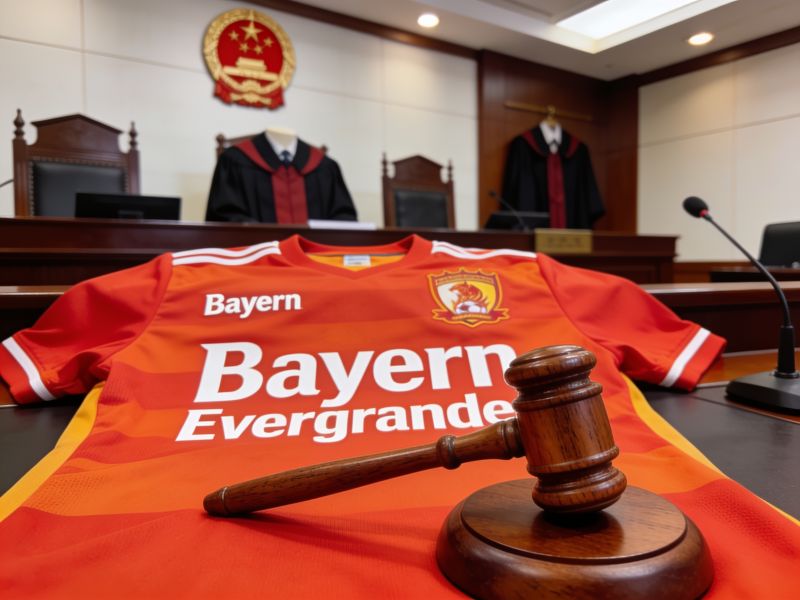
Bayern's response was swift and。frankly, a bit dismissive. The club's lawyers argued that 'Bayern' is a geographic term with no connection to Evergrande's brand identity. They submitted decades of merchandise catalogs, stadium signage, and fan surveys showing that consumers associate 'Bayern' exclusively with the football club. The EUIPO's Opposition Division ultimately sided with Bayern in mid-2024, rejecting Evergrande's opposition on the grounds that the marks were visually and conceptually dissimilar. The ruling noted that Evergrande's own mark included a distinctive Chinese character element, which reduced confusion. Evergrande Bayern, as a legal concept, dissolved quietly — no press release, no appeal.
What sticks with me is the timing. Evergrande filed the opposition in 2023, just as its liquidation hearings began in Hong Kong. Why would a company in freefall spend legal resources on a trademark spat with a Bundesliga club?A former Evergrande employee in Guangzhou told me it was likely a last-ditch attempt to monetize intellectual property before asset freezes tightened. The company had already sold off its football club, Guangzhou Evergrande。and was liquidating peripheral trademarks. 'They were scraping the barrel,' he said. Bayern, meanwhile, treated the whole thing as a minor annoyance. A club spokesperson declined to comment, but a merchandise manager laughed when I asked: 'We've been Bayern for 124 years. This won't change that.'The Evergrande Bayern case won't make case law textbooks. It was a minor EUIPO decision, easily forgotten. But it captures something about the era: a collapsed developer's desperate grasp at brand value, and a football giant's bemused indifference. Trademark disputes like this rarely involve products consumers actually buy — they're about defensive portfolios and legal leverage. Evergrande had neither by the end. The club kept its mark, Evergrande kept its debts, and the word 'Bayern' remains, in the EU at least。unambiguously Bavarian.